the drip
A little over a year ago, I left a professional role that had become familiar. It was steady and, in its own way, safe. But somewhere inside that familiarity I'd lost touch with part of my drive and what really connected me to my work. I wrote about that decision at the time; the pivot, the roundabout, whatever you want to call the space between something ending and a new beginning.
A lot has evolved since that time and I love what we’re building here at Oracol, but last fall, before we had a name, an experience I had in Mexico became a metaphoric anchor for me and for our vision and mission at Oracol.
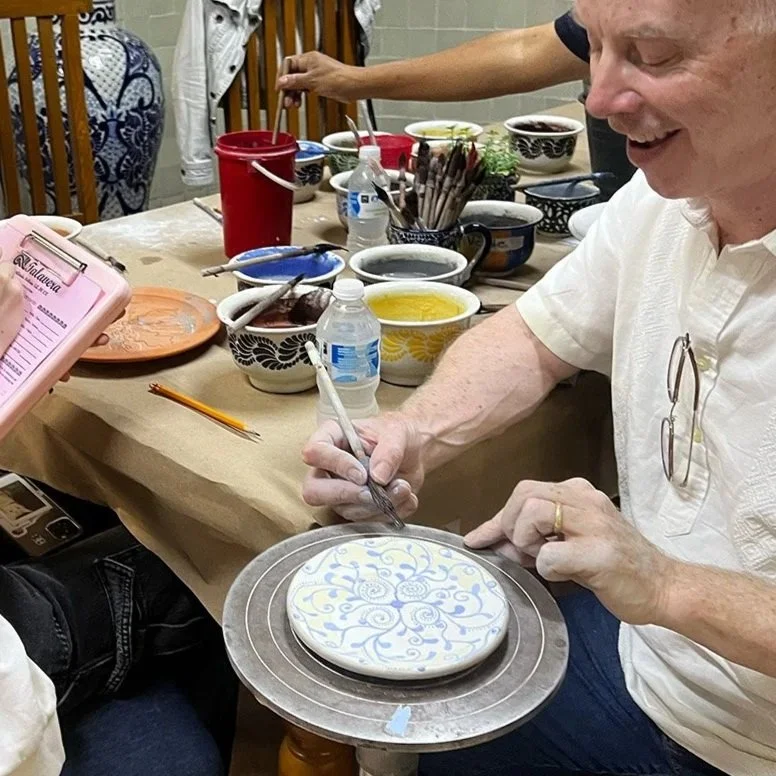
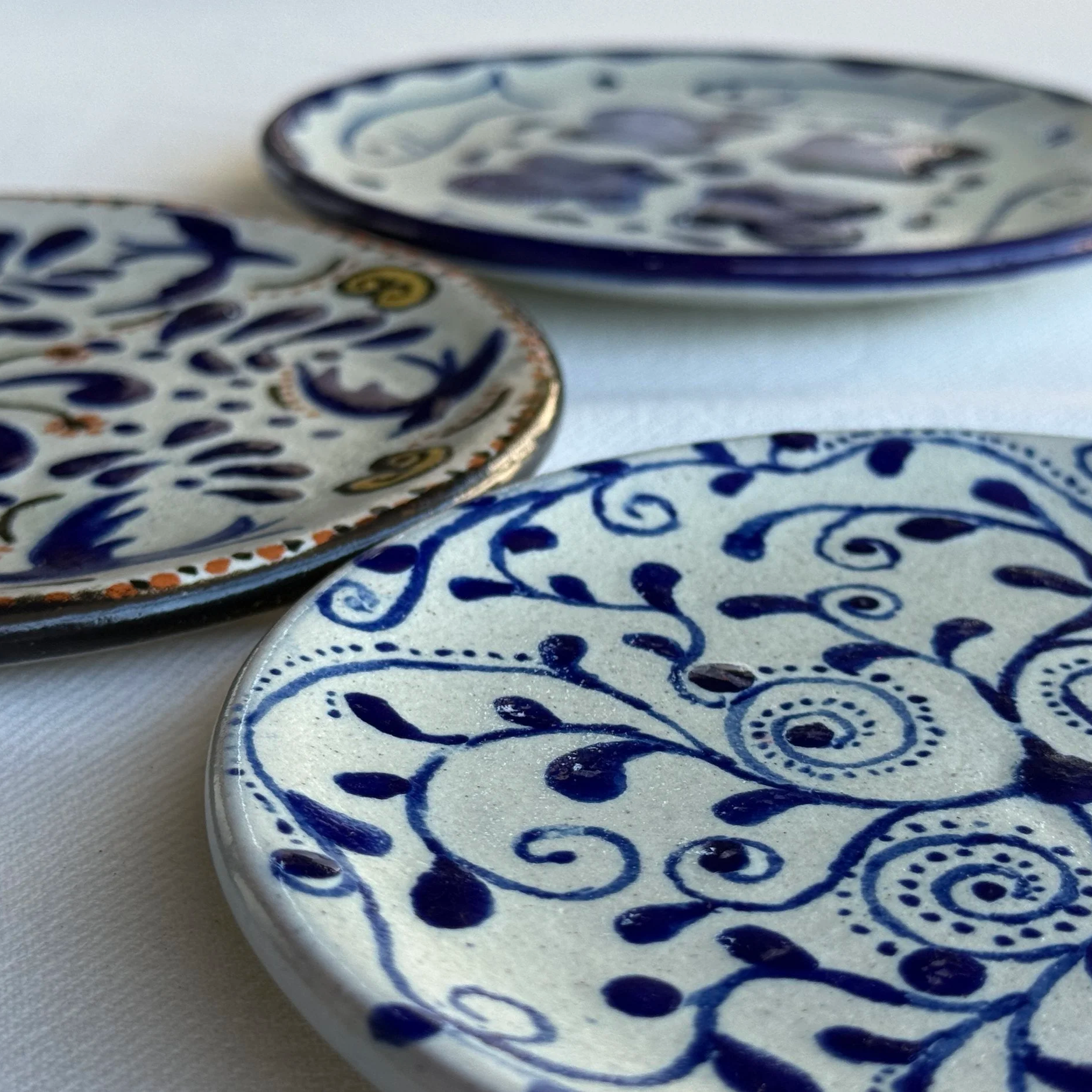
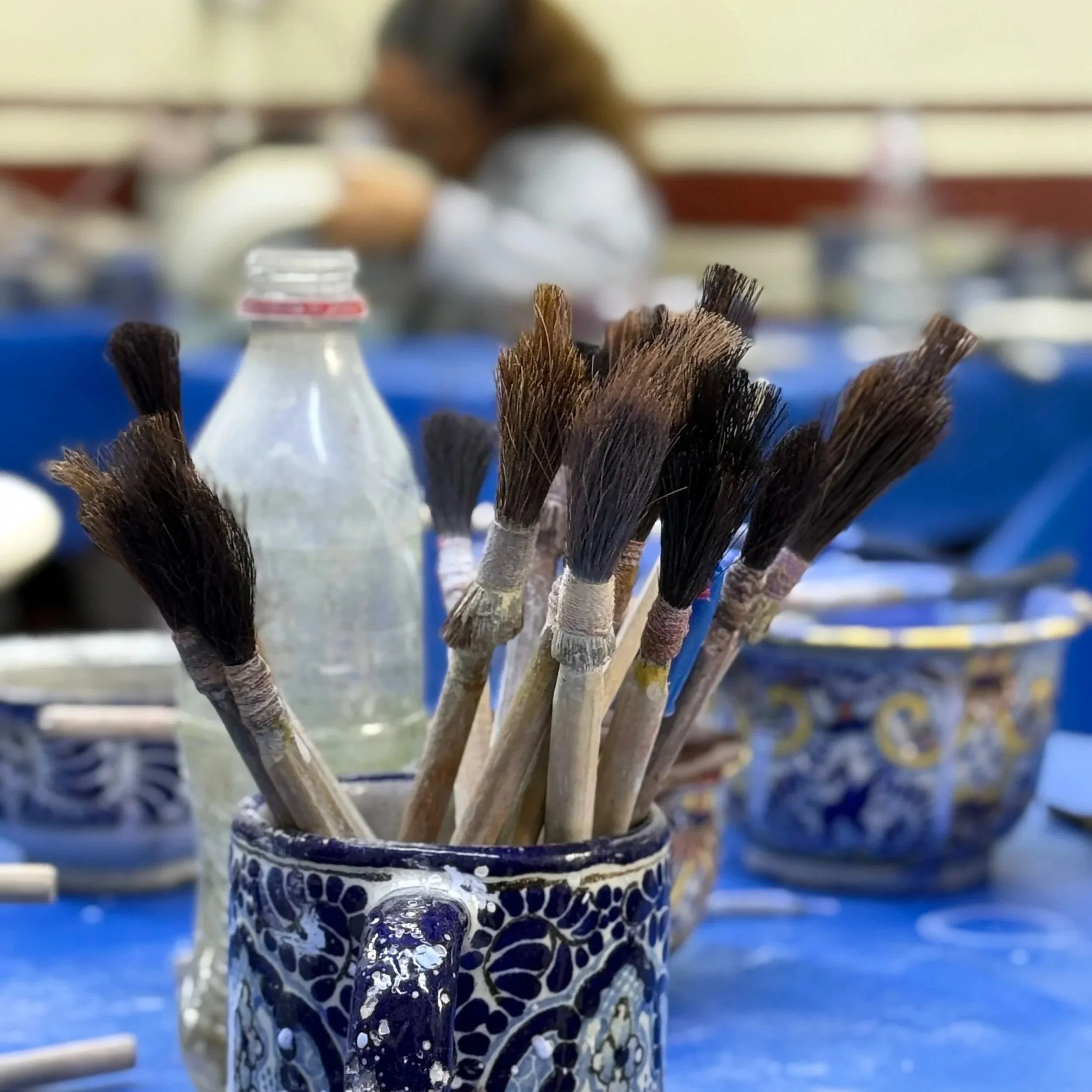
I was in Puebla with my family, at Uriarte Talavera, the oldest producers of Talavera ceramics in Mexico. During our visit we’d been invited to spend time in a studio with the opportunity to design and paint our own small ceramic pieces. A member of the studio staff set us up in a small painting room with handmade brushes, seven traditional colors of liquid pigment, and three underglazed side plates.
No plan. No sketch. Just the tools and the opportunity.
My daughter started on her own plate a few feet away. My wife worked on hers. Every so often we would glance over, watch each other's progress, and perhaps pick up an idea. But we weren't teaching or advising, just working collaboratively and finding energy in each other’s inspiration and process.
I got absorbed in my own painting the way I get absorbed in a design problem, each stroke building logically on the last, a whole idea taking shape one decision at a time. And then, mid-thought, in a moment of not looking closely enough, a heavy drop of pigment fell from my brush to the center of my plate.
I was devastated, genuinely. This pattern that I’d put so much attention to felt ruined. And I found myself completely stopped in my tracks and seemingly helpless, with no way to work through it.
Our studio guide saw it happen. She didn't rush over or wince but calmly picked up the plate, studied it thoughtfully, and gently handed it back to me.
"It's okay," she said. "Just work with it."
Four words, and something in me loosened up. I stopped thinking about how to recover the plate I'd envisioned and started paying attention to the one in front of me. The rest of the design came together around that drip, and by the end it was, I think, a better design that incorporated nuance and much better reflected my own curiosity and discovery.
We’ve thought back on that moment probably more than a small ceramic dish deserves, and with humor thank goodness. The root was really about how the simple reframing "it's okay, just work with it" was unexpectedly transformative and turned a potentially traumatic experience into a different and better one. The learning for me has been about attention; staying attentive enough during a process to notice when it offers you something you didn't plan for, for being open-minded enough to recognize it, and to trust yourself and your process enough to take it.
It's also, we've come to realize, a decent parallel to how we actually work together as a team, and how we collaborate with colleagues and clients. We start with discovery and curiosity, and make no assumptions. We listen, we adjust, and we learn from each other, just the way three people leaning over three plates learn from each other by remaining receptive and trusting. The work gets better for it.
Which is why, as we build out Oracol, we wanted a place to keep doing that in public: noticing the moments, planned and unplanned, that actually shape how we design and how we lead. And now you understand why we’re calling it The Drip.
This is the first post. There will be more, some about projects, some about challenge and learning, and most probably somewhere in between.
Welcome.